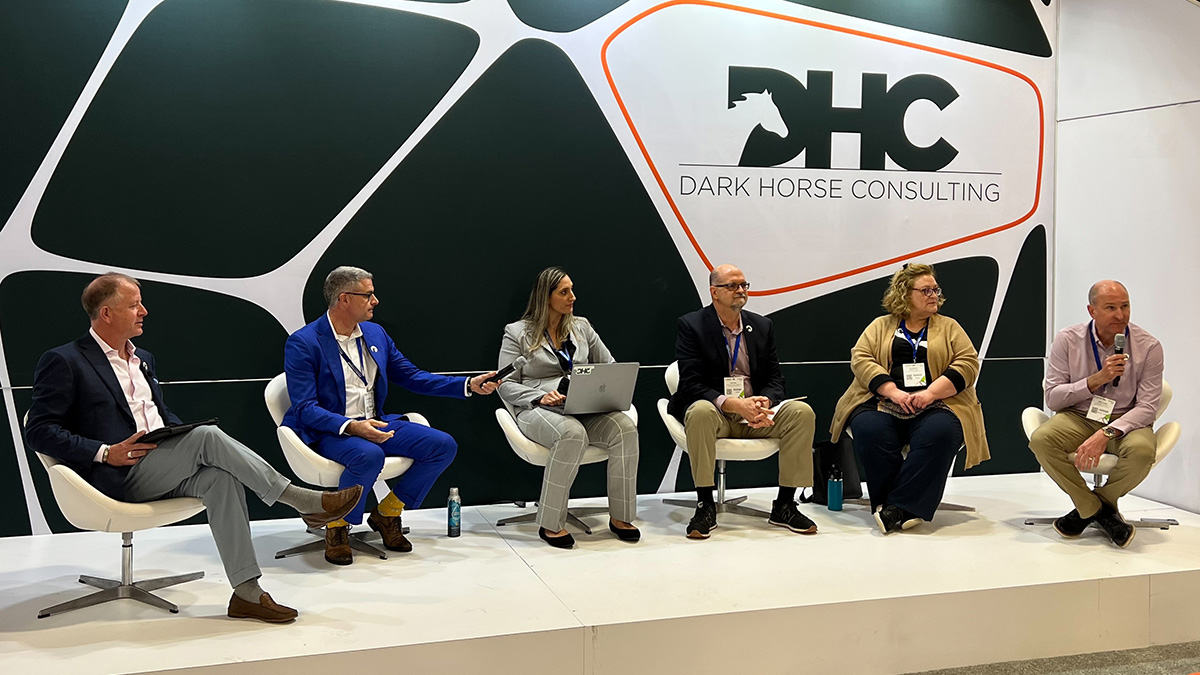
During Phacilitate’s Advanced Therapies Week ’23 in Miami last week, our former-FDA panel of regulatory experts got together to answer audience questions about both early- and late-stage regulatory concerns during the DHC Lunch & Learn activities. We’ve compiled the questions and key takeaways here.
Early-stage regulatory questions and takeaways:
What mistakes do you see sponsors making repeatedly?
- Failure to follow FDA’s advice. FDA comments are provided in order to help…in fact, sometimes FDA will supply advice without even being asked for it. Pay attention to these recommendations.
- Either not consulting available published FDA guidance documents, or not reading the relevant guidance documents. Related: not delineating between what is “nice to have” and “must have” information.
- Using a manufacturing process version to produce material used for preclinical studies that is different from the clinical material manufacturing process being proposed for use in an IND application.
- Not making effective use of meetings with FDA. Poorly written briefing materials, vague, unfocused, or overly broad questions. Related: viewing the FDA as an adversary rather than as a provider of support and guidance.
- Not asking for clarification when necessary. In fact, in the context of meetings, there is a clarification procedure that allows you to request clarification of meeting responses if the request is made within 20-days of the date of the meeting or issuance of written responses. This is for clarification only, not for new questions.
- Asking one set of questions in the Meeting Briefing materials and then attempting to ask additional questions during the actual FDA interaction.
- Not sufficiently planning ahead. (Sponsors should have an outlined plan in place early for progressing from manufacturing through development and from initial IND application to commercialization. Ideally, sponsors should consider commercial strategy from the start due to accelerated developmental timelines in the cell and gene therapy (CGT) space, particularly for rare disease indications).
Do DMPQ reviewers get involved in early-stage filings?
On occasion: yes; these reviewers may sit in on pre-IND meetings, typically to look for potential patient safety issues that could be associated with a manufacturing facility that is not in good control.
Advice for seed and Series A companies on how to help investors understand that they need to spend early-stage money addressing CMC issues.
- Educate the investors according to their priorities: help them understand that making money off the investment requires working on CMC development early. Ultimately, come time of licensure, 80% of review issues in CGT are CMC-related because that’s where everything tends to fall down, so it follows naturally that that’s where you should be investing from the start. Also, in most rolling submission BLAs for CGT products, the CMC Module 3 is the last to come in, so investing in CMC early can help shorten the overall review timeline for a license application and therefore the approval timing.
- Investors also need assistance in more fully appreciating relevant product development timelines that take into account the full impact of FDA regulatory review practices, particularly for novel therapeutic modalities. Otherwise, they may fall prey to overly optimistic timelines due to a lack of understanding regarding the impact FDA interaction has on those timelines.
- Related: The field would benefit if sponsors would share real-life examples of CMC-driven delays and failures in the CGT space.
Are CMC issues less scientific and technical and more business and operational? (If so, they could be less critical to de-risk early if it’s relatively certain that issues would be solvable?)
No. CMC issues are both business/operational and scientific/technical. For example, it can be quite technically challenging to identify suitable potency assays or to ensure that a gene editing technology is sufficiently specific for the target site.
Side note: There has been a regulatory shift in recommendations concerning the timing for engaging in potency assay development…instead of leaving potency assay development until initiation of a Phase 3 study or pivotal clinical study, beginning to develop candidate potency assays is encouraged as early as the preclinical phase.
Is it true that FDA is raising the bar/tightening up?
There is a change in and clarity of focus, but that’s different than raising the bar. It’s more about how you can see something more clearly as you get closer to it. FDA is following the science and evolving its approach as it both learns what is important and also as new scientific tools make more things possible. After all, regulators are still in the early stages of learning how best to regulate this class of products. (Only 5 years ago Heath was in a room learning how to do the first CAR-T related facility inspections, for example!)
What are the regulatory differences in early stage CGT vs early stage traditional biologics?
For a start, traditional biologics like monoclonal antibodies and therapeutic proteins are regulated by CDER, not CBER. The transfer of traditional biologics occurred back in 1999, when FDA determined that they were canonically well-characterized products with well-established processes, and for which the requirements were well known, so there was not a need for early interactions like pre-INDs.
[Side note: This can create a wrinkle for those CGT processes that use a monoclonal antibody in their process, because CBER calls in CDER for a consult on that critical material, and CDER only knows one way to regulate monoclonal antibodies.]
In contrast, CGT products are much more diverse and there are not yet well accepted standards for manufacture and testing. Besides, there’s a lot scientific innovation in the field happening in real-time.
What are some best practices for INTERACT meetings?
Note: INTERACT meetings are the new terminology for what used to be called pre-pre-INDs. These meetings arose out of the nonclinical review team’s wish to be able to give earlier advice to sponsors to avoid wastage in animal use, etc. Most issues for discussion are intended to be nonclinical, but it’s also become pretty common for CMC to get pulled in as well. The name was changed to INTERACT about a year and a half ago. Then, just this past October 1, with PDUFA VII coming into effect, these became a formal meeting with a target of a 75 day timeline.
- For reference, be aware of FDA’s “Interactions with OTAT” website that includes a lot of useful information about these and other meetings.
- Use your time wisely! It takes time to prepare for an INTERACT: don’t waste that time and burn the precious opportunity to get FDA’s feedback by holding this meeting at the wrong time or being underprepared for it.
- Be aware that sponsors must submit the briefing package along with the meeting request for INTERACT meetings, so plan your meeting timeline accordingly.
- For an INTERACT to be granted, you should have not only a novel product, but also novel development issues on which you need advice.
- Ensure that your specific issues or concerns are within the intended scope of INTERACTs.
- There is a bit of a “goldilocks effect” regarding the stage of development: sponsors need to be not too early and not too late, but just right. You need to have a product but not be in GMP manufacturing mode yet. You also need to have some pilot preclinical data, but be in the planning stage for key IND- enabling preclinical studies.
- In general, only about a third of INTERACT meeting requests are granted.
[ed. note: DHC-client’s INTERACT stats are vastly better than this industry average. To date, 87% of DHC-supported INTERACT meetings have been awarded.]
Does the panel anticipate flexibility in using alternatives to animal models given initiatives to reduce animal use?
FDA is indicating being open to using in vitro models where it makes sense. For example, for gene editing, the edits are sequence-specific, meaning that the same product won’t work in animal models. Therefore, cell lines may be a better fit.
Overall, the best advice on this front would be to understand what the critical questions are for your product and propose using fewer animals to answer those questions in a focused way.
The process of reducing animal use is going to be gradual and needs to be driven by the sponsor. You need to make a reasonable proposal for what you are going to do; FDA will evaluate and critique your proposal, but not serve as the source of its design. Also note: these types of proposals to use in vitro models rather than in vivo ones to address certain questions are an example of a perfect topic for discussion during an INTERACT.
Speaking of animal studies, when are non-human primate studies required as part of nonclinical development?
In general, NHP studies may be required by the agency only when either:
(i) there’s a need to study interaction of the therapy with the immune system that cannot be recapitulated using another preclinical animal model, or
(ii) there’s a need for size and/or anatomy that requires use of NHPs due to the product’s route of administration.
Sponsors sometimes also choose to do NHP studies for a more accurate system in which to study and confirm the intended clinical dose. Some product types (like MSCs) have gone through so many animal studies that the need for those models decreases due to precedent. Access to NHPs has become quite challenging, post-Covid, so it is more critical than ever to limit use to cases where such studies are necessary.
Any general advice to our audience regarding communication with the agency?
- Remember that FDA is not developing your product for you; you will need to have specific and considered questions prepared.
- However, be aware that there is usually a 12-question limit for most meeting types. (Sub-questions 1(a), 1(b) and 1(c) count as three questions!)
- Ensure that your questions are concise and clear, but counterbalance that emphasis by providing sufficient information to allow the FDA to answer your questions. As an example, if you are asking whether your release criteria are adequate for an IND, you will generally need to provide more detailed information than just a table of specifications; you will need to include description of your test methods.
- When you are submitting an amendment to an IND application, make it very clear what is being changed within each section of the IND. That makes the reviewer’s life much easier.
- Take advantage of all opportunities for agency interaction.
- Recognize the value of having a regulatory project manager (RPM) as a conduit.
- Don’t be afraid to use the request for clarification method mentioned above.
- When preparing a pre-submission request, it is highly encouraged to write the questions first. Then write the package providing the information and positions to support those questions.
Working for DHC has provided these former regulators with perceptions from both sides of the regulatory table. What is different when sitting on the sponsor’s side of that table?
- From the regulator’s perspective, often “the cost of compliance is the cost of compliance.” From the sponsor’s side of things, it’s much clearer how very expensive compliance is. This puts the onus on the sponsor to develop systems to maintain compliance in a pragmatic and cost-effective way.
- The disconnect between regulatory practices and the sponsor’s development plans is very real, especially in regards to timelines. The approach on the sponsor side is usually “hurry! hurry! hurry!” while that is not the driving factor from the regulator’s view. What this can often mean is that if you’ve had limited FDA interaction in your program, you are likely to have unrealistic timeline expectations.
- FDA doesn’t necessarily realize how their feedback is received by sponsors, or what unintended impact the feedback may have.
- Many sponsors don’t realize that when a regulator asks to “provide a justification,” they don’t typically have a particular answer in mind. They’re asking that question specifically because they’re trying to understand why you’re proposing what you are, and are asking you to provide reasonable scientific logic to support your proposal. They need the entire story.
- Many sponsors are afraid of the FDA. What they don’t realize is the FDA wants to see good science and novel therapies succeed. FDA is reliant on the sponsor, though, to make it clear what they are doing and why. The conversation is a two-way street.
Late-stage regulatory questions and takeaways:
What are your thoughts on best practices for demonstrating comparability?
- Submit your comparability protocol to FDA for their feedback before you perform the study. These studies are expensive to execute and often use irreplaceable material, so it’s critical to know you have FDA buy-in before you do the study.
- Early-stage comparability and late-stage comparability requirements are very different.
- Plan for a waiting period between proposing a comparability strategy to FDA and then implementing. While a priority, there isn’t a mandated timeline for reviewing a comparability strategy submission.
- Pre-Phase 3/Pivotal Clinical testing: submit proposed manufacturing changes before the pre-Phase 3 meeting. Otherwise, it may not be clear which batches of investigational product are considered comparable, and therefore which patient data can count towards your efficacy evaluation, which can complicate the ability to receive useful feedback in this meeting.
- It is very important to keep retains of critical preclinical and clinical lots during development, so that they can be used for any future comparability analyses.
- If you are making late-stage process changes, it may be better to submit your BLA first and make the changes post-approval.
What recommendations might you offer on a strategy for potency assays?
- Interact with FDA early to get their feedback on your proposed approach to potency.
- In the past, general advice was to have a candidate assay by Phase 3 and validate it by the time the BLA meeting rolls around. Now, sponsors are being advised to have a qualified assay by the time you have started dosing the first patients that you want to include so as to support efficacy in your BLA submission. For some rare diseases, this may be as early as your first patient dosed in Phase 1.
- During your pre-BLA meeting, ensure final confirmation that FDA agrees with your potency strategy.
- Maintaining retains of key lots throughout development is, again, very important in the context of potency assay development.
- Be aware that you may need to pursue multiple candidate assays for assessing potency (matrixed potency approach).
- A good potency assay goes hand in hand with comparability, as you can hinge your comparability analysis on reliable demonstration of product potency.
How do you recommend that sponsors prepare for facility inspections?
- It is never too early. Some CDMOs have submitted Type C meeting requests 5-7 years ahead of actually building the facility because FDA’s answers to their questions about facility design can materially impact their business model.
- For a sponsor planning to build their own facility, a Type C meeting to discuss facility design is a must. It’s very expensive to build and run a facility, so you would certainly not want to risk not being able to get a product approved for manufacture in that facility.
- Certain types of process-specific questions can also be included in the Type C meeting as facility and process questions can often be highly interrelated.
What are some best practices you’d recommend for process validation?
- Start data collection very early. Perform process tracking and trending throughout development to assist in identification of your NORs and PARs.
- Aim for more than three consecutive PPQ runs, to give some room for a run to fail.
- It may be feasible to use healthy donor material instead of patient material in the case of orphan diseases as a workaround for insufficient patient material being available.
- Consider submitting your validation strategy for review. (But, keep in mind FDA workload when doing this; ensure that the proposed strategy is concise, clear, and contains sufficient information.)
- Be aware that material identification and qualification are important parts of process validation.
- Be aware that too many deviations during PPQ runs can shine a spotlight on your quality systems during inspection.
- Ensure that quality systems are in place and strictly adhered to. Are deviations during PPQ runs followed up upon in a timely manner, investigated, CAPAs identified, etc?
How are current FDA staffing challenges and bandwidth limitations impacting reviews?
- FDAは帯域幅の制限を十分に認識しており、その解決に取り組んでいます。
- 当面の間、INDやBLAといったPDUFAの期限が優先されます。そのため、修正案の審査は後回しとなり、審査に1年以上かかる可能性もあります。
- 帯域幅の制限により、会議の開催要請はますます厳しく精査されています。
- 対象とする臨床適応症によっては、特定の臨床分野でさらに人手不足が深刻化しています。そのため、会議が承認された場合でも、臨床審査官が必要な場合には、予定されていた会議日が先送りされることがあります。
- 対面での会議は期待しないでください。当面の間は、書面による回答のみとなる可能性が高いことを想定しておいてください。
- 短期的には、PDUFA VIIによってFDAが対応すべき会議の種類(Type Dミーティング)が新たに追加されるため、人員不足の問題はさらに深刻化する可能性があります。
- 特別な指定制度も帯域幅の制限に影響を与えています。例えば、RMAT指定の申請数は、FDAの予想をはるかに上回っています。
スポンサーは、利用可能な迅速審査プログラムの範囲について混乱することがよくあります。それらは何であり、スポンサーはどのようにしてその資格を得るのでしょうか?
FDAは、以下の違いについての概要を 優先審査(Priority Review)、画期的治療薬(Breakthrough Therapy)、迅速承認(Accelerated Approval)、RMAT、ファストトラック(Fast Track) オンラインで提供しています。その他の重要なポイントは以下の通りです。
- 優先審査は、BLA申請の審査期間に具体的かつ明確な影響を与える唯一の指定であることに注意が必要です。優先審査により、審査期間が4ヶ月短縮されます。標準審査が12ヶ月(申請期間2ヶ月+審査期間10ヶ月)かかるのに対し、優先審査は8ヶ月(申請期間2ヶ月+審査期間6ヶ月)で完了します。
- 画期的治療薬およびRMATの指定を受けると、FDAとのやり取りの頻度が増えるという利点があり、スポンサーが賢明に活用すれば開発を加速させることができます。
- ファストトラックの場合、非臨床データまたは臨床データを用いて、深刻な疾患を持つ患者の満たされていない医療ニーズに対処する可能性を示すことができます。
- 画期的治療薬およびRMATには、臨床データが必要です。
- RMATの臨床データに対する基準は画期的治療薬よりも低いですが、いずれの指定を受けてもスポンサーが得られるメリットは同じであることは注目に値します。
- FDAは、BLA申請を受理した時点で、その治療法が優先審査の対象となるかどうかを評価します。[編集者注:DHCは通常、どの指定がクライアントに適しているかについてガイダンスを提供できます。]
最後に、推奨される行動と避けるべき行動をまとめます。
FDAを驚かせるようなことはしないでください!
FDAとは早期からオープンに連携すること。
後期開発段階を後回しに考えないこと。
プロセスバリデーションや力価試験などは、最初から検討しておくこと。
組織のサイロ化という罠に陥らないこと。
品質部門と製造部門が互いに連携するよう促すこと。他の部門間でも同様です。
開発全体を通じてCMCの重要性を軽視しないこと。これは開発が遅延する典型的な原因です。
開発を通じてCMCが臨床データと整合していることを確認すること。CMCモジュールが最後に取り残され、BLA審査の開始が遅れる事態を防ぐためです。