Author
Eric Humes, RQAP-GLP
Senior Practice Expert, Dark Horse Consulting
An examination of the FDA’s Bioresearch Monitoring (BIMO) metrics for Clinical Investigator (CI) and Sponsor/CRO inspections reveals two relatively unchanged year-on-year noncompliance trends in GCP-regulated clinical research: 1) clinical protocol noncompliance and 2) inadequacy of monitoring. A question without a singular cause: Why do these two noncompliance trends continue to be cited by FDA BIMO Investigators across all phases of clinical development?
“Inspection Readiness (IR)” is the buzzword broadly describing how Industry attempts to identify preventable findings in preparing for an inspection performed by FDA BIMO or other regulatory authorities (e.g., EMA, PMDA, MHRA, and Health Canada). Despite these efforts to adequately prepare, BIMO GCP Inspection metrics indicate that clinical-stage Sponsor GCP IR programs and affiliated activities may be deficient and/or ineffective. A significant contributing root cause to inadequate inspection preparation can be linked to how clinical-stage Sponsors approach the implementation of GCP IR programs/initiatives; specifically, the lack of differentiation between and understanding of “Inspection Readiness” versus “Inspection Preparation”.
Conceptually, Inspection Readiness should be a foundational element of the pharmaceutical quality system (refer to ICH Q10) and a core value of organizational behavior that shapes and defines the Sponsors’ culture of quality. Objectively, all clinical-stage product Sponsors share a common goal, namely, the delivery of safe and effective therapeutics to their patients. However, each Sponsor’s research and development journey from lead candidate to eventual commercial product may be distinctly different, requiring unique, bespoke approaches to institute phase-appropriate GCP quality system fitness. A key milestone in the journey for any Sponsor seeking marketing application approval is the GCP inspection process.
In contrast, “Inspection Preparation” encompasses the set of focused, tactical activities, typically led and managed by the Quality Unit (QU) or Clinical Quality Assurance (CQA), necessary and relevant for entertaining an upcoming inspection. In distinction to the active Inspection Preparation exercise, many IR programs are simply a series of checklist-driven activities intended to meet the C-suite objective of being inspection ready with the flawed goal of achieving a no 483s issued outcome. Despite the spirit and intent of prioritizing a clean slate inspection outcome as a goal, this misguided focus often results in the IR process devolving into a fire-fighting exercise performed at the operator-level, with the knock-on effect being creation of a culture infused by inspection anxiety and fear, ultimately resulting in the opposite of what is intended and that is inspection unpreparedness. As Deming noted, “You can’t test quality into a Product”, similarly, a Sponsor cannot build quality into pivotal clinical trial(s) several months before presentation of an FDA Form 482: Notice of Inspection by FDA investigators at a Clinical Investigator site or for the Sponsor/CRO inspection.
An effective culture of GCP inspection readiness fosters individual contributor understanding of their GCP regulated responsibilities, enhancing their connection to organizational purpose ultimately enabling realization of a Sponsor’s mission statement. Being GCP Inspection Ready is a do it right the first-time mindset exercised on a daily basis that empowers operators to focus on building quality into clinical study design, study execution, and the systems supporting clinical development programs while reinforcing the behaviors that sustain and strengthen organizational quality management maturity (QMM). In this context, GCP Inspection Readiness, as a quality system element, is the application of clinical Quality by Design (cQbD) principles to the GCP outputs of the Quality Management System (QMS). This includes, but is not limited to the investigational plan (study protocol) and subsequent protocol amendments, study-level guiding documents (e.g. monitoring plan), and clinical quality issue management (e.g. GCP CAPA program).
Ineffective IR initiatives or programs share a common lifecycle within low QMM organizations: 1) the program/initiative is implemented as a reaction to an imminent inspection, 2) leadership emphasizes a no 483 observation outcome, and 3) misallocation of Sponsor/CRO resources in preparation (e.g. unplanned monitoring visits, ad-hoc site or CRO audits, notes-to-file). In short, the degree or level of a Sponsor’s QMM directly impacts the efficiency and effectiveness of the inspection readiness lifecycle.
Many clinical-stage organizations do not consider GCP IR as a foundational quality system element; instead reacting only when the GCP inspection is imminent. Arguably, this framing is rooted in the Sponsor’s naivete to GCP expectations and a primary focus on product quality (cGMP). What is it that constitutes a successful GCP inspection outcome? While a no 483 issued outcome is desired, success should not be solely defined by a no 483 issued outcome. Instead of achieving the desired outcome, increasing the pressure of preparation by setting a meaningless objective of no deviation findings has the opposite effect. Success should be defined by no surprises encountered at the time of the inspection – no first-time significant findings of GCP and/or protocol noncompliance.
The genesis of a no 483 outcome GCP Inspection begins prior to the first-patient-in (FPI) on the first-in-human (FIH) study. GCP Inspection success is the Sponsor’s ability (and all stakeholders transferred regulatory obligations) to provide evidentiary demonstration of an adequate, well-run and controlled, GCP compliant clinical study(ies) in which patient safety, data quality, and data integrity are evident. Sponsors with a high-level QMM will not be surprised by inspection outcomes. All significant GCP noncompliance/deviations (e.g. ineligible subject enrolled, deficient amendment process, re-consent errors) will have been self-identified contemporaneously with occurrence and are presented to GCP inspectors in the front-room with transparent honesty; demonstrating ownership of the quality issue, understanding of root/contributing cause(s) and effective implementation of lessons learned preventing recurrence on the study(ies) and when applicable, to the clinical quality system. In contrast, a low-level QMM Sponsor has significant noncompliance and quality issues identified for the first time during the inspection and behaves in a defensive, finger-pointing, unaccountable manner (Service Provider was responsible) when questioned about the occurrence(s) discovered upon inspection.
The Clinical Trials Transformation Initiative (CTTI) group has coined the definition of quality in clinical research as the absence of errors that matter. At the heart of an efficient and effective QMS, is the establishment of an inspection readiness mindset – how a Sponsor manages and documents the errors that occur throughout the program and demonstrates continuous improvement is exemplary of QMM.
With the finalization of ICH E6(R3) in 2025, and adoption by FDA in September 2025, the concept of clinical Quality by Design (cQbD) (and GCP Inspection Readiness) is presented as a principle of GCP as follows:
· Quality should be built into the scientific and operational design and conduct of clinical trials.
o Quality of a clinical trial is considered as its fitness for purpose.
o Factors critical to the quality of the trial should be identified prospectively. These factors are attributes of a trial that are fundamental to the protection of participants, the reliability and interpretability of the trial results, and the decisions made based on those trial results. Quality by design involves focusing on factors critical to the quality of the trial in order to maximize the likelihood of the trial meeting its objectives.
o Strategies should be implemented to avoid, detect, address, and prevent recurrence of serious noncompliance with GCP, the trial protocol, and applicable regulatory requirements
` to the Deming cycle (Plan, Do, Study, Act), the following model represents Inspection Readiness as a QMS quality element through the planning activities, executed by subject matter experts (SME), leading to clinical outputs that ensure the well-being of patients and the quality and integrity of data. As studies are conducted, lessons learned are fed back into the clinical quality system; the new knowledge gained is analyzed and leveraged to continually improve Sponsor strategies to avoid, detect, address and prevent recurrence of errors (risks) that matter.
cQbD (Inspection-Ready) Lifecycle Model
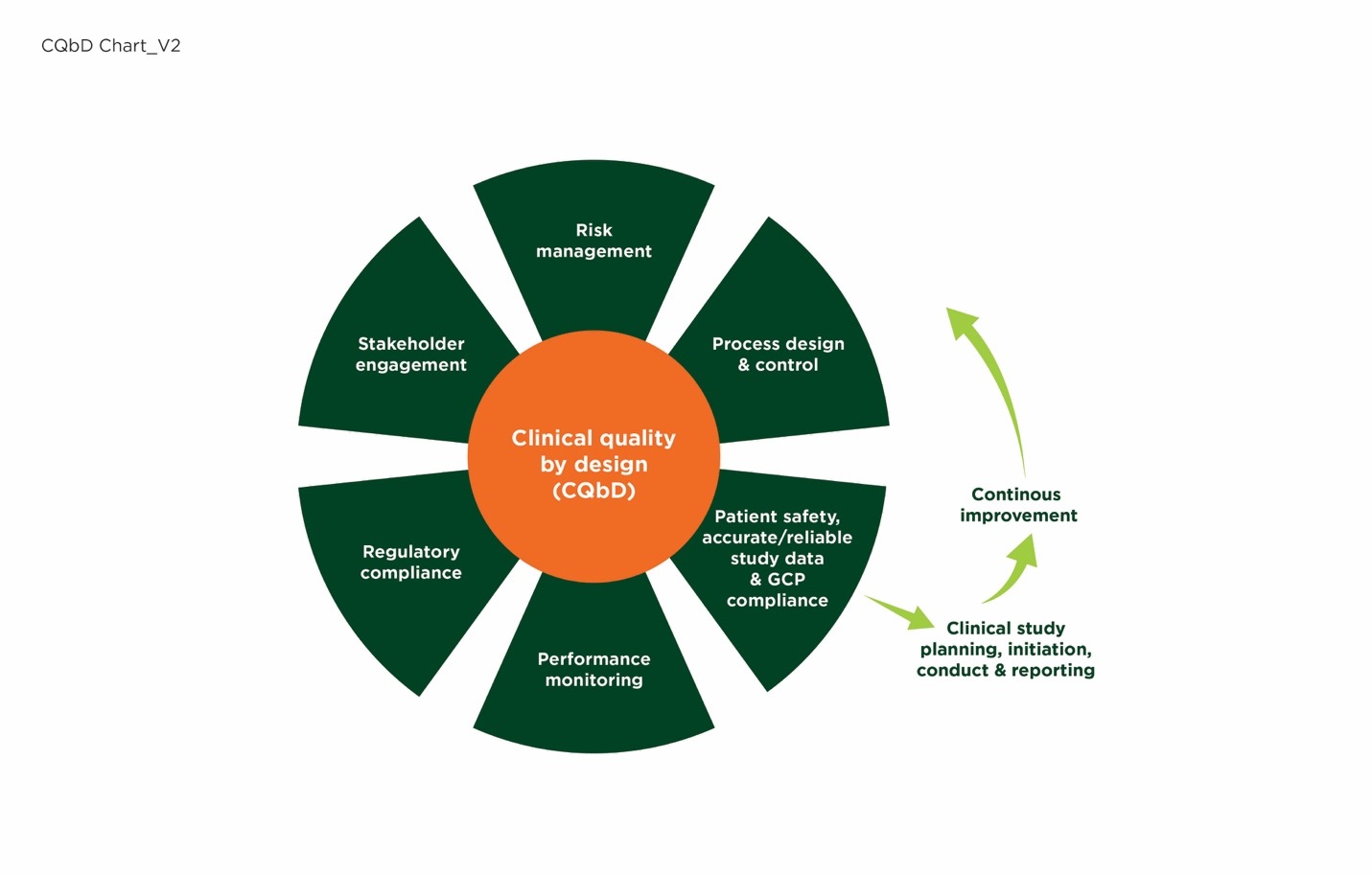
The cQbD (Inspection-Ready) Lifecycle Model draws from two foundational quality frameworks: (1) ICH Q9(R1): Quality Risk Management, and (2) the Deming Cycle, applied as lessons learned from clinical study conduct are fed back into the quality system to strengthen Sponsor management and oversight consistent with ICH E6(R3).
The Dark Horse Consulting Group (DHCG) Clinical Team possess deep subject matter expertise and industry-leading experience in providing clients with strategic and operational clinical quality support in the development and implementation of clinical systems designed to meet global GCP compliance requirements. DHCG leverages cQbD principles to ensure GCP Inspection Readiness in a manner that is both phase-appropriate and fit-for-purpose throughout the product development lifecycle, from first-in-human clinical investigation under an IND through BLA submission. DHCG’s approach emphasizes creating a culture of quality where Inspection Readiness is coded into the DNA of the organization, in turn promoting a do-it-right-the-first-time mindset that is exercised on a daily basis and not just in reaction to an imminent FDA BIMO cGCP Inspection. This approach minimizes the risk of the FDA identifying deficiencies in clinical processes or data, which in turn reduces the likelihood of potentially lengthy clinical delays, and ultimately therapeutic approval.
To learn more about Dark Horse Consulting Group’s clinical team capabilities, please reach out to: bd@darkhorseconsultinggroup.com
Subscribe to our mailing list for the latest insights on advanced therapy development, regulatory updates, industry trends, and upcoming events from Dark Horse Consulting Group.
We respect your privacy. Unsubscribe at any time. We will never sell your information.