China IITs Are Unique and Operationally Challenging Across the Clinical Supply Chain
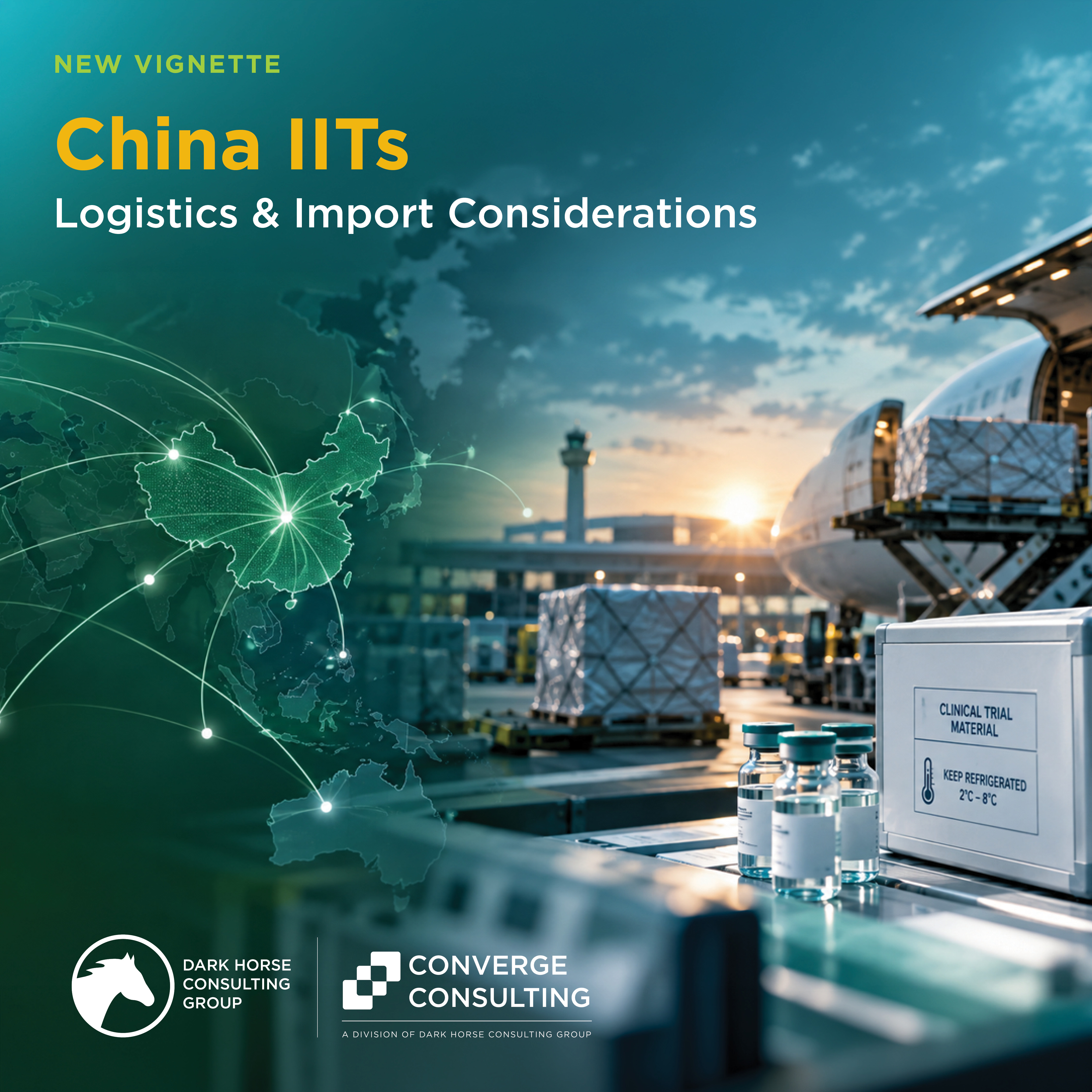
Understanding the clinical supply chain, logistics, and import framework for Investigator Initiated Trials (IITs) in China is critical for biopharma companies seeking to leverage the country’s speed and cost advantages in early clinical development. While China offers compelling benefits to clinical development, supply chain and importation processes differ significantly from Western markets due to a high level of scrutiny on investigational materials, fragmented regulatory oversight, direct to hospital/site distribution and inventory models, and evolving customs and importation enforcement practices.
Unlike in the U.S. and Europe, where clinical trial approval generally enables importation of cGMP drug product (DP) finished good investigational materials (IMP), China treats importation as a separate regulatory and compliance process. Chinese Customs (GACC) acts as a gatekeeper and will not release shipments unless documentation is complete, consistent, and aligned with the declared clinical purpose. Shipments are often held at port until all requirements are satisfied, increasing the risk of IIT timeline delays and operational disruptions, with potential loss of valuable clinical material.
Recent trends indicate that Chinese Customs authorities have become less flexible, particularly for clinical trial materials imported from outside China. Furthermore, for advanced therapies (e.g., cell and gene therapy), there is growing pressure to align import timing with patient-specific informed consent, adding complexity to supply chain planning.
Expertise and Partnership Are Essential
Many sponsors, particularly those new to China IIT processes, underestimate the complexity of both the clinical execution model and the physical logistics importation process of DP finished goods/investigational materials. In practice, successful execution requires tight coordination between sponsors, CROs, hospitals/sites, logistics providers, and local regulatory experts.
For example, advanced therapy companies have recently encountered various investigational material import situations where:
In these cases, delays were often driven not by a single missing document, but by misalignment across regulatory, clinical, customs, hospital/site, and logistics stakeholders.
However, operational trade-offs remain. While sponsors often prefer to import larger batches for efficiency, evolving expectations, particularly for advanced therapies such as cell and gene therapy (CGT), may require patient-specific importation tied to informed consent, placing international shipping directly on the treatment administration critical path.
As sponsors evaluate China IIT strategies, these evolving operational realities highlight that execution risk extends well beyond clinical study design. Regulatory uncertainty, import requirements, and partner capabilities increasingly influence study feasibility, timelines, and overall program success.
Challenges and Risks
Potential requirements to align import timing with patient consent may reduce flexibility and increase execution risk.
What to Do
Realizing the speed and cost advantages of China IITs requires sponsors to address supply chain, importation, and logistics considerations early and integrate them into the broader clinical execution strategy. Importation should not be treated as a downstream activity; decisions regarding import pathways, local partner roles, documentation, product handling, and contingency planning can directly affect China IIT study feasibility and timelines.
Particular attention should be given to local partner capabilities, import readiness, and for advanced therapies, the impact of patient-specific requirements on shipment and treatment timing. Leading practices include:
China IITs can provide substantial strategic value for sponsors seeking accelerated development timelines for advanced therapies, earlier clinical insight, and more efficient generation of proof-of-concept data. However, realizing these benefits requires a level of operational coordination, regulatory preparation, and logistics & supply chain planning that many sponsors may initially underestimate.
Success depends on treating China IIT execution as an integrated clinical, regulatory, and logistics & supply chain strategy rather than solely as a clinical opportunity. Sponsors that plan early, establish clear accountability across local and global stakeholders, and proactively address importation and logistics & supply chain requirements will be better positioned to preserve the speed and cost advantages of the China IIT model while minimizing execution risk and avoiding preventable delays.
Subscribe to our mailing list for the latest insights on advanced therapy development, regulatory updates, industry trends, and upcoming events from Dark Horse Consulting Group.
We respect your privacy. Unsubscribe at any time. We will never sell your information.